
Ultimate Europe Road Trip Guide: Tips and Best Routes

💡 This post might contain affiliate links. If you use any of these links to buy a product, I will earn a small commission at no additional cost to you. Read my full disclosure for more details.
|Updated on December 28, 2025|
A road trip in Europe is a dream for many travelers, and this Ultimate Europe Road Trip Guide: Tips and Best Routes will help you plan yours! With scenic routes, charming towns, and rich culture, Europe is perfect for exploring by car.
Planning a road trip here isn’t like in the USA. You’ll be crossing borders and navigating different countries. In this guide, you’ll learn what you need to know to plan smart and enjoy a stress-free European adventure.
Things to Know for Your European Road Trip
Can You Drive in Europe with a USA License?
The short answer is yes, you can drive in Europe with a valid US driver’s license for up to 90 days. However, it’s important to note that some countries may require an International Driving Permit (IDP) in addition to your license. After 90 days, the IDP will be mandatory if you want to keep driving in European countries.
The IDP translates your license into multiple languages and is recognized worldwide. While optional in some European countries for the first 90 days, it’s safer to get one. Countries requiring an IDP to rent a car include Croatia, Austria, Italy, Greece, Hungary, Slovenia, Spain, Slovakia, France, Germany, and Luxembourg.
Note that an IDP is not a substitute for your driver’s license. You’ll need to carry both documents with you when driving in Europe. You can obtain an IDP from the American Automobile Association (AAA) or the American Automobile Touring Alliance (AATA).
What it Takes to Drive in Europe
Driving in Europe is similar to driving in the US, but there are a few key differences to remember. You will need a list of documents, such as your driving license or IDP, vehicle insurance, V5C certificate, and travel insurance.
Furthermore, roads in Europe are generally narrower, and cars are smaller. Additionally, many European cities have strict driving restrictions, such as low-emission zones, so it’s essential to research the rules of the cities you plan to visit.
In general, it’s a good idea to brush up on local driving laws and customs before hitting the road. By doing so, you will reduce the unpleasant surprises as much as possible and worry about fewer aspects.
Car Rental in Europe
Renting a car is a great option if you want the freedom to explore Europe on your own schedule. You can find major car rental companies throughout Europe, and you can usually reserve your car online before your trip.
However, be aware that rental prices vary widely depending on the time of year and location. So, shopping around for the best deal is essential.
Driving Tolls in Europe
Driving on toll roads is a common experience during a trip to Europe. It’s important to understand the toll systems in the countries you’ll be driving in. Here’s an overview of tolls in Europe.
- Most countries will have a highway toll that varies based on the distance you are going to travel. You can pay it in cash or by credit card.
- Countries like Austria, Switzerland, and Romania require a vignette. This is a sticker you affix to your windshield that allows you to use the country’s highways. The vignette is available for durations from 10 days to a year. You can purchase it at gas stations and border crossings.
- It’s important to note that some countries, like Italy and France, also have tolls for tunnels and bridges. These fees are usually collected at the entrance or exit of the tunnel/bridge. Some toll systems, like the electronic toll systems in Portugal and France, require you to register beforehand and pay online.
Make sure to research the toll systems of the countries you’ll be driving through during your road trip in Europe. Have the necessary cash or credit cards to pay toll fees handy so you can go through the checkpoints fast.
What to Pack for a Road Trip in Europe
Packing for a road trip in Europe will depend on the season and the countries you plan to visit. In general, here are the main things you should have on your checklist for your road trip in Europe!
Documents. Before you hit the road, ensure you have all the necessary documents. These documents include your passport, driver’s license, vehicle registration, and insurance. It’s also a good idea to have a copy of your itinerary and hotel reservations.
Navigation. While GPS and navigation apps are great, carrying a physical map for backup is wise in case of technical difficulties. It would be best to consider purchasing a Europe-wide GPS navigation system for smooth navigation across different countries and regions, or simply download an Offline Google Maps.
Comfortable Clothing. Pack comfortable clothing suitable for the weather conditions of the places you visit. Include items like comfortable shoes, a light jacket, and clothing for occasions, like a swimsuit or formal wear.
First Aid Kit. Pack a first aid kit that includes essentials like band-aids, antiseptic wipes, painkillers, and any medications you may need. Make sure to include any prescription medications in their original packaging.
Snacks and Water. Road trips can be long and tiring, so having a supply of snacks and water is essential. These will keep you energized and hydrated throughout long driving hours during your time in Europe.
Entertainment. Long car rides can get boring, so pack some entertainment to keep yourself occupied. This could be an e-book, downloaded music, podcasts, etc.
Cash and Credit Cards. While most places in Europe accept credit cards, having cash on hand for emergencies is always a good idea. You might need cash when you are visiting smaller towns or local markets.
Power Bank. Ensure you have a power bank to charge devices, especially if you plan to use them for navigation or entertainment.
Travel Adapters. Pack the necessary travel adapters for the countries you’ll be visiting to ensure you can charge your devices.
Emergency Kit. Better to be safe than sorry, so pack an emergency kit with a flashlight, a blanket, and a reflective vest.
Best European Road Trip Routes
Here are the top three routes for your spontaneous or planned road trip in Europe that you can consider. Note that you can easily combine or change the routes according to your interests. However, they are impressive as given, and you will have your life experience!
France to Germany
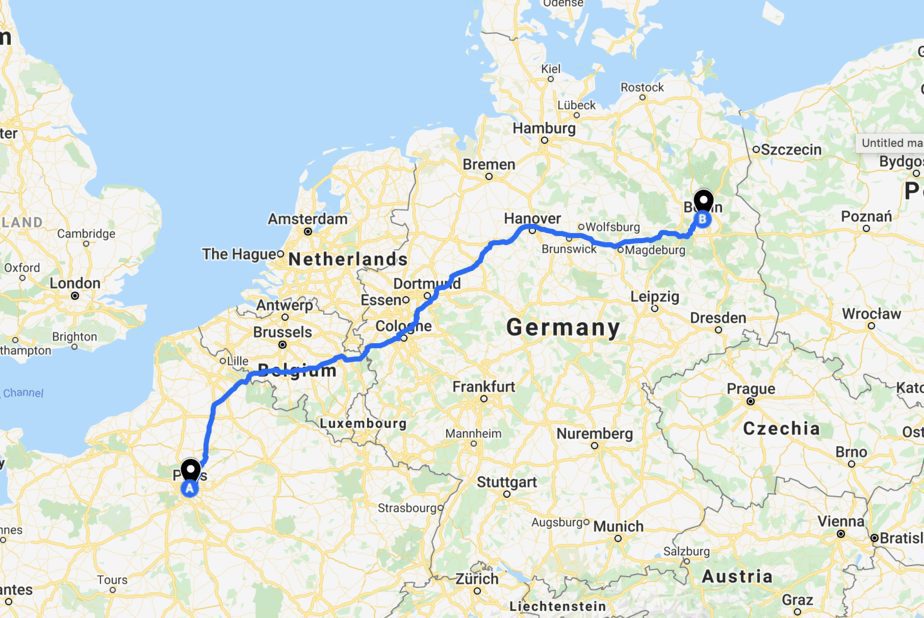
Departing from Paris, consider this European road trip itinerary and take the scenic route through the hills of Champagne and Reims to the charming capital of Luxembourg. Here, you can explore the country’s numerous fairy-tale castles. The most famous castles are Vianden, the Beaufort Castles, and the Clervaux Castle.
- Trier
A short drive of less than an hour to the northeast will lead you to Trier. This is Germany’s oldest city, where you can admire remarkably preserved ancient Roman baths and basilicas. A great hotel to consider is the Best Western Hotel, located next to the Europahalle Trier Centre. For a more intimate place, choose the Hotel Villa Huegel, which has an inviting pool and a beautiful dining area.
- Bacharach
If you make it past Tier without spending the night in town, enjoy an overnight stay in the medieval village of Bacharach. Here, you can stay at Hotel Im Schulhaus, a popular place with nice water views and a local winery. The best dining place in the village is Altkölnischer Hof, a delight in the summer when they have tables outside.
- Nuremberg and Leipzig
Then, stroll through the picturesque riverside streets of Heidelberg before continuing to Nuremberg and Leipzig. While in Leipzig, immerse yourself in Cold War history and classical music while indulging in a dose of hot caffeine.
If you want to spend a luxurious night in Leipzig, the Steigenberger Grandhotel Handelshof Leipzig can offer great accommodation services. This 5-star hotel has a spa, fitness center, and luxurious rooms.
For more budget options, these hostels can be a great choice to spend a night. Groners Leipzig is located in a prime location and equipped with everything you will need for a night. Another budget option for a quick night stay in Leipzig is Five Elements Hostel Leipzig.
- Dresden and Berlin
If time allows, make a detour to Dresden, which has been beautifully restored following the destructive bombing of WWII. Wrap up your journey in Berlin, one of Europe’s most innovative cities.
Once you reach Berlin, you will find many restaurants, museums, and impressive architecture to admire. If you are looking for accommodation in Berlin, one of the most appreciated hotels is KPM Hotel & Residences. This hotel is only 2 km from Kurfürstendamm and has a 24-hour front desk.
For a more extended itinerary, start your trip in London and take the ferry or Channel Tunnel to France, transforming your road trip into a pilgrimage between Europe’s three artistic hubs.
If you want to save money on accommodation in Dresden or Berlin, consider one of these hostels. If you are a nightlife lover, Hostel Mondpalast in Dresden might be the best choice for you as it is close to all bars and clubs. If you would like to attend some social events while on a short stay in Dresden, pick Lollis Homestay. They are located in the center of Dresden and offer daily events.
If, instead, you decide to spend a night in Berlin, then I would recommend Circus Hostel for a perfect short stay. They have quiz nights, karaoke Thursdays, and live music Fridays! Pick the best day. Like to stay in a historic place, so you can experience the local view and learn more about Berlin’s history, then Meininger Berlin Mitte Humboldthaus is a place to stay.
Europe Borders
To cross borders in France, Luxembourg, Germany, or other European countries as a non-EU citizen, you need a valid passport. A visa is required if you plan to stay over 90 days. Since November 10, 2024, American and other non-EU citizens must use the EES digital entry/exit system and obtain an ETIAS travel authorization, valid up to 3 years or until your passport expires.
You’ll also need your vehicle registration, insurance documents, and US driver’s license. An IDP is required to drive in Luxembourg, France, and Germany.
Romania to Austria
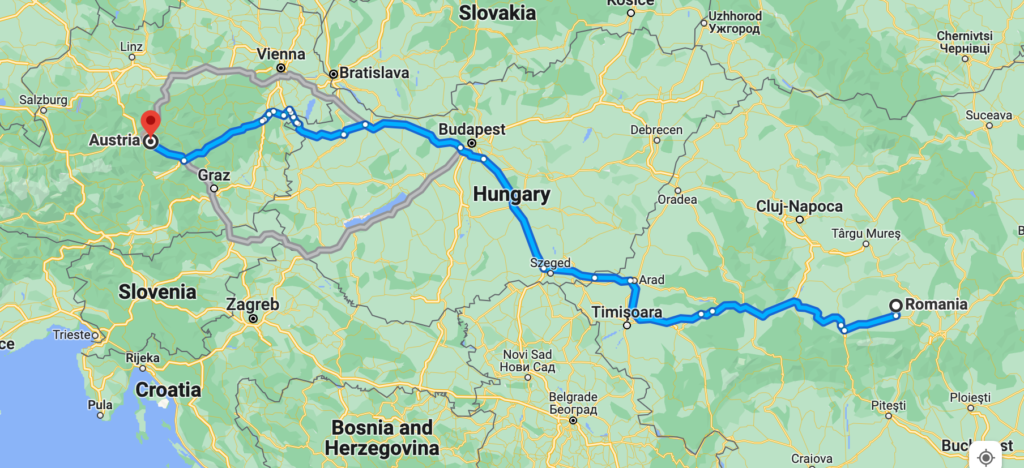
Embark on your journey from Bucharest, heading north through the breathtaking Carpathian Mountains towards Transylvania. Be sure to make a mandatory stop at Bran Castle, claimed to be the former dwelling place of the infamous Dracula.
- Transfagarasan
From there, take the Transfagarasan mountain road, known as one of the most scenic routes in the world. Make sure to check if the road is open during your trip, as it is closed during challenging weather. Along the way, discover the ancient cities and numerous castles of Sibiu, Brașov, and Sighișoara. You will be very tempted to take a night off in Brasov. The town has many hotels and B&Bs, such as the Grand Hotel Brasov or Casa Wagner.
- Timisoara
Then, head to the uncharted architectural treasures of Timisoara. You will find charming architecture, parks, museums, and the iconic Huniade Castle here. The castle is right in the city’s heart, built in the 14th century. As for accommodation, check out this upscale President Hotel or this budget option, Hostel Cornel.
- Budapest
Continue your expedition to the peaceful hot springs and trendy ruined pubs of the vibrant city of Budapest. You might want to plan to spend at least a few days in this intriguing city. Belvaros is district 5 of the town, where most restaurants, cafes, and tourist attractions are. Spend a night at Up Hotel Budapest, which offers a health club, a fitness center, and a sauna. Or enjoy your stay at Meininger Budapest Great Market Hall.
- Bratislava and Vienna
Afterward, set off for Bratislava, the capital city full of surprises. It is only an hour’s drive from there to Vienna’s charming coffeehouses and diverse architecture.
Vienna has a long and fascinating history, having been the capital of the Habsburg Empire for centuries. This has left the city with a wealth of cultural treasures, from stunning baroque architecture to world-class art museums.
Take a break from the road and stay a night at VIP Apartments in Bratislava or in the Best EU Art Boutique Capsule Hostel Chors.
Portugal Road Trip
Begin your road trip in Braga and then drive towards the south to the medieval town of Guimarães, recognized as a UNESCO World Heritage site. Next, continue your journey to Porto.
- Porto
It is a beautiful city with a rich cultural heritage and attractions that draw tourists from all over the world. The city is also known for its famous port wine, which can be enjoyed at one of the many wine cellars along the Douro River. Additionally, there are many picturesque streets to explore and natural beauty, such as the Douro Valley and the Atlantic coast.
- Figueira da Foz
Drive towards the east to explore the vineyards and steep valleys of Penafiel and Amarante. Then, head towards the coastal road leading to the vast white beaches of Figueira da Foz, considered among the best beaches in Portugal. You can even spend a few days here, as you will find plenty of hotels close to the beach.
Continue your trip to Peniche and Ericeira, and finally arrive in Lisbon, the vibrant capital in the running to beat out Berlin as Europe’s most incredible city. You will want to spend some days here to explore it in depth. A great accommodation is Dear Lisbon – Charming House, located in the trendy Chiado neighborhood. It offers cozy rooms with vintage decor and a rooftop terrace with views of the city.
Drive south to reach Sagres, Arrifana, and Carrapateira. After enjoying the sun on the picturesque shores of the Algarve, conclude your road trip to Faro, also known as the Mediterranean dreamland.
If you still want to explore more after reaching Faro, consider taking a ferry from nearby Algeciras in Spain to Morocco. Picture the satisfaction of parking your car in the desert village of Merzouga before embarking on a journey to explore the Sahara. Note that Morocco is not a European country, so the regulations will be slightly different.
Europe Road Trip FAQ
-
Do I need an International Driving Permit (IDP) to drive in Europe?
Yes, an IDP is required in some countries like France, Germany, Luxembourg, Italy, and Spain. It translates your license into multiple languages and ensures you can legally rent and drive a car.
-
What is the best time of year for a European road trip?
The best time is spring (April–June) or early fall (September–October). The weather is pleasant, roads are less busy, and accommodation prices are lower than in peak summer months.
-
How much should I budget for a European road trip?
Costs vary depending on countries, travel style, and rental choices. On average, plan for €50–€100 per day for a car, fuel, and accommodation if you travel on a budget.
-
Can I use my US driver’s license in Europe?
Yes, but in some countries you’ll also need an IDP. Check each country’s rules before traveling to avoid fines or rental issues.
-
How many countries can I visit in a single road trip?
It depends on your pace and time. Many travelers combine 3–5 nearby countries in a 1–2 week trip.
Final Thoughts
After exploring Europe by car, it’s clear that a road trip is one of the best ways to see the continent. From charming cities to beautiful beaches, you’ll find endless opportunities for adventure and relaxation.
With some planning, you can explore historic towns and stunning landscapes while enjoying the freedom of traveling at your own pace.
Do your research, plan carefully, and get ready for an unforgettable European road trip. I hope you found this Ultimate Europe Road Trip Guide: Tips and Best Routes helpful. Thanks for reading!
Pin it for later
Travel Resources & Accommodation
- Find the best flight deals on Skyscanner and Kiwi
- Book travel packages on Expedia
- Book hostels worldwide on Hostelworld
- Book hotels worldwide on Hotels.com
- Discover and book affordable tours on GetYourGuide


[…] Articles: |A day trip to Montserrat |Ultimate guide to planning a road trip in Europe |2 days in Lisbon […]