
The Ultimate Bangkok Travel Guide

💡 This post might contain affiliate links. If you use any of these links to buy a product, I will earn a small commission at no additional cost to you. Read my full disclosure for more details.
|Updated on October 9, 2025|
Planning your first trip to Bangkok? This Bangkok itinerary for first-time visitors helps you plan your days efficiently, save money, and experience the city without stress.
Bangkok is Thailand’s capital and one of Southeast Asia’s most exciting cities, famous for its street food, markets, temples, nightlife, and cultural contrasts. With so much to see and do, having a clear plan makes a big difference.
This guide covers the best things to do in Bangkok, where to stay, how to get around, and practical tips for first-timers and solo travelers.
⭐ Before You Go – Must-Knows ⭐
- Hot & humid all year (30–35°C) – pack light clothes, flip-flops, rain jacket for sudden showers
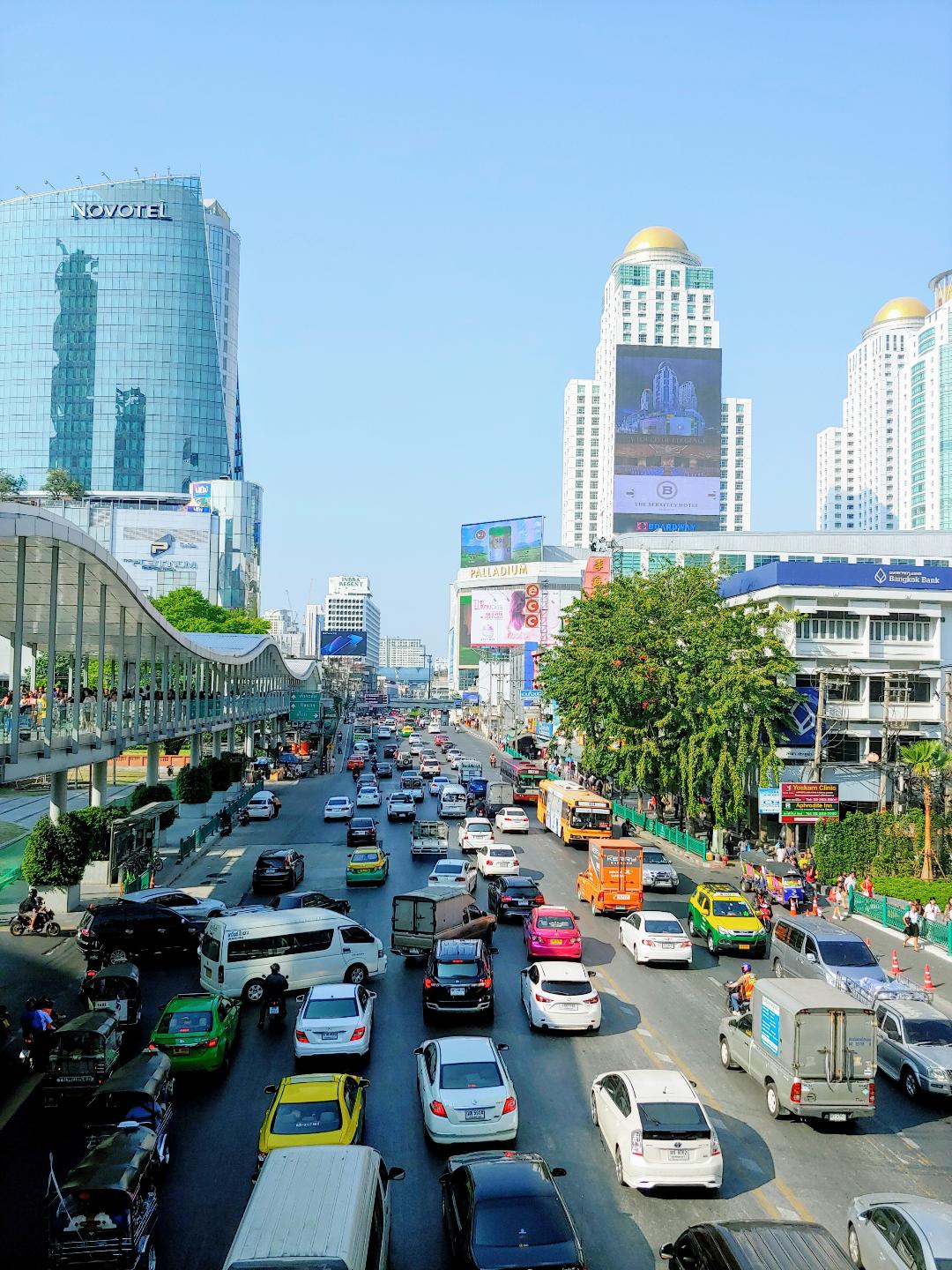
- No car needed – traffic is chaos; use BTS Skytrain/MRT (cheap & fast), Grab rides, or tuk-tuks
- Scams everywhere (tuk-tuk “closed temple” tricks, fake gems) – ignore “friendly” strangers, use official taxis/Grab
- Thai Baht (THB) only – cards OK in malls/hotels, but carry cash (small bills) for street food/markets; ATMs charge 220 THB fee
- Tap water is not safe – drink bottled water
- Airport to city – Airport Rail Link 45 THB (30 min) or Grab ~350 THB; avoid unlicensed taxis
- Best time to visit – Nov–Feb (cooler); avoid Apr (too hot) & Sep–Oct (heavy rain)
- Visa – 60 days free for most (check your country); TM6 arrival card online now
What to See and Do in Bangkok
-
Visit Khao San Road
The most popular place for backpackers is Khao San Road, one of the most famous Bangkok tourist attractions.
The best thing about this area is that you don’t have to walk a lot to find places, as they are all located next to each other. This area is famous for its cheap hostels, restaurants, Thai street food, market, and nightlife.
During the day, it can be quieter than at night. It is where you can relax (from getting a massage, for example), go shopping, or just party the whole night.
-
Visit Palaces and Temples
Bangkok has countless temples, so instead of trying to see them all, focus on a few of the most famous ones to get a real sense of the city.
Keep in mind. Temple dress codes in Bangkok are strict. Shoulders and knees must be covered, so wear long skirts or pants and a top with sleeves. If you arrive in shorts or a sleeveless top, entry may be denied. Some temples offer clothing rentals, but they typically accept cash only.
You can’t miss visiting the Grand Palace and Wat Phra Kaew. This is one of the most iconic attractions in Bangkok, and although the entrance fee is 500 Baht (~$16) for foreigners, it’s well worth it to experience Thailand’s incredible architecture and rich history.
Wat Arun. One of Bangkok’s most striking temples on the banks of the Chao Phraya River is also a must-see. The entrance fee for international visitors is around 100–200 Baht (~$3-$7), and children often enter for free or at a reduced price.
Wat Saket. The gorgeous, artificial hill has a golden chedi on top, said to contain a relic of Buddha. It offers a beautiful view of the city after climbing 344 stairs. The cost is 100 Baht/adult, within walking distance from Khao San Road.
Wat Pho. The oldest and largest temple. It is known as one of the largest temples in Bangkok, and its giant reclining Buddha is 46 meters long and covered in gold leaf. The cost is 300 Baht (~$9.50) per adult.
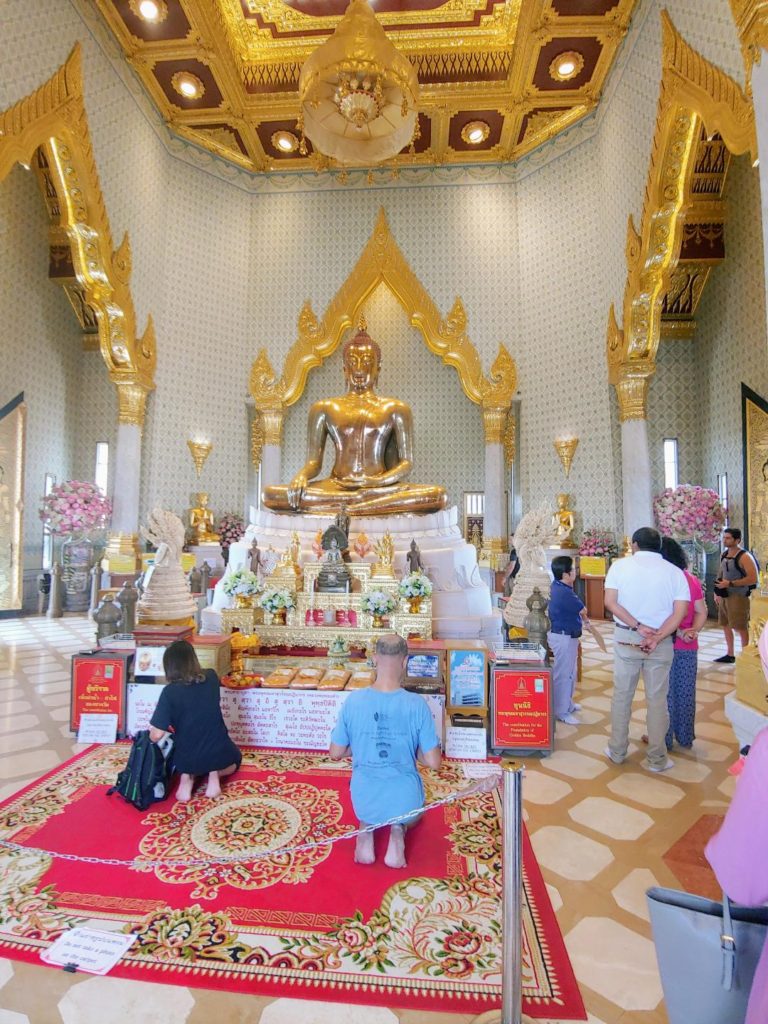
Wat Traimit. Located in Bangkok’s Chinatown, this temple is home to the world’s largest solid gold Buddha statue. The entrance fee is 100 baht, and inside you’ll see the impressive 3-meter-tall, six-ton Golden Buddha, which makes this temple one of Bangkok’s most unique and frequently visited sights.
-
Visit Bangkok Floating Markets
The most famous one is the Damnoen Saduak Floating Market, often featured in Bangkok travel guides. I didn’t get a chance to visit it myself, but it looked like such a fun experience. The boats are piled high with fresh fruit, colorful juices, and sizzling street food. It’s one of those places that perfectly captures the vibrant spirit of Bangkok.
-
Get a Thai Massage
As a big fan of foot massages, this was a must-do in Bangkok for me. With so many massage shops nearby, it was hard to resist going often. Massages in Bangkok are very affordable, typically costing $8–24, depending on the place.
-
Visit Chatuchak Weekend Market
Chatuchak feels like a massive open-air market, with endless rows of clothes, shoes, and accessories, and bargaining is expected. It’s a great place to shop until you drop. Since it gets extremely crowded on weekends, arrive early to avoid the biggest crowds.
-
Join a Chinatown, Bangkok Tour
The Chinatown tour is one of the day tours you can have on your Bangkok visit. Packed with market stalls, many restaurants, and frequent gold souvenir shops, Chinatown is an experience not to miss. As there is so much to do and see, you can spend hours browsing stores, eating the best Thai food, or visiting temples.
-
Explore the Lumpini Park
It is one of the largest parks in central Bangkok. The park is full of green plants and offers a great view and relaxation. You can have a picnic, read a book, ride a bicycle, or enjoy the Jazz orchestra on Sunday.
-
Try an Extreme Sport
If you’re looking for adventure, try zip-lining near Bangkok. Flight of the Gibbon is a popular option. It’s not cheap, but worth it for the experience. A small deposit is paid online, with the balance in cash only.
The tour includes hotel pickup from a central location and takes about 7 hours total, with roughly 2 hours of zip-lining through the rainforest outside the city. Safety training is provided, food is included, and transportation back is arranged. It’s scary but unforgettable—and worth trying if you’re up for it.
Where to Stay in Bangkok for a First Time
Choosing where to stay in Bangkok can feel overwhelming. Hotels and hostels are often located side by side, and prices can be surprisingly similar. Here’s a simple breakdown of the best areas to stay in Bangkok for a first visit, from a solo traveler’s perspective.
-
Khao San Area
Best for: budget travelers, social vibe, walkability
- Lively, tourist-friendly area with constant activity
- Plenty of hostels and mid-range hotels
- Easy access to street food, restaurants, fresh fruit, and markets
Pro tip: Bargaining is expected at markets. Prices are often flexible.
I stayed at The Lol Elephant Hostel, about a 10-minute walk from Khao San Road. The location made it easy to explore on foot. Each bed had a curtain and a power outlet, which felt private and comfortable, and breakfast was included. The hostel also followed a common Thai custom – removing shoes indoors. Which added to the homey feel.
-
Siam Square / Sukhumvit Area
Best for: shopping, easy transportation
- Close to major malls and shopping areas
- Well connected by the SkyTrain and MRT
- Easy to get around without taxis
-
Riverside Area
Best for: scenery, luxury stays
- One of the most beautiful parts of Bangkok
- Close to Old Town and historic sights
- Ideal if you’re not traveling on a strict budget
- Home to many upscale hotels
-
Chinatown (Yaowarat)
Best for: food lovers, local atmosphere
- One of the most impressive Chinatowns in the world
- Famous for street food, traditional markets, and vibrant streets
- Especially lively in the evenings
Transportation in Bangkok
Bangkok is a bustling city with lots of transportation options. Finding your way to navigate around in the capital of Thailand has never been easier, especially when you know the local tips for using the rail system and street transport.
Bangkok MRT (Metro)
The MRT operates two main lines: the Blue and the Red. The price of a single journey ticket is distance-dependent, ranging from 17 to 45 Baht, and up to 70 Baht if you are changing lines. You can buy tickets from the ticket office (which sometimes has long lines) or use the ticket machine, which accepts both paper money and coins.
Key MRT Tips:
- Your ticket is a small plastic token: Tap it on the reader to enter, and then insert it into the slot at the exit gate to leave the station. Keep it safe!
- If you plan to use the MRT often, consider buying the stored value card for quick, convenient access.
- If you need to switch lines, you don’t have to go outside and buy another ticket; simply change the platform inside the metro.
Bangkok BTS (SkyTrain)
The sky train has two major lines, the Sukhumvit and Silom lines, which intersect at Siam Station. While both lines can be quite packed during rush hours, they are invaluable for crossing the city quickly. The cost starts at 15 Baht for one stop, increasing to 47 Baht for longer distances.
Key BTS Tips:
- A One-Day Ticket for multiple travels costs 150 Baht and is a great value if you plan several trips in a single day.
- The Rabbit Card is a rechargeable smart card that offers some discounts for frequent travelers.
- Similar to the MRT, your ticket is tapped on the way to enter, but then inserted when leaving the station.
Tuk-Tuks in Bangkok
Riding a tuk-tuk is a must-try on any Bangkok checklist and is one of the funniest ways to see the city. However, the price is per ride and is not metered, so you must negotiate!
Tuk-Tuk Negotiation Pro-Tips:
- Be Friendly: Thai people appreciate polite tourists. Always start with a smile and a friendly demeanor.
- Negotiate: The starting price will always be inflated. Try to negotiate down from 5 to 15 Baht.
- Avoid Rush Hour: Do not use a tuk-tuk during peak traffic times (7-9 AM or 5-7 PM), as you will be stuck in a vehicle without air conditioning, and drivers are less likely to offer a good deal.
- Quick Fares: A brief trip will usually cost a minimum of 30 Baht.
Buses in Bangkok
In my opinion, the bus is the most valuable public transport for travelers who want to see the whole city for a low price. However, you sacrifice comfort as many buses are older and lack air conditioning.
Bus Travel Essentials:
- Hours and Cost: Most buses run between 5 AM and 11 PM. Fares are around 8–32 Baht. Air-conditioned buses (light blue) start from 15 Baht.
- Navigation: Use Google Maps to figure out the route, as figuring it out using the BMTA map can be frustrating for non-Thai residents.
- Change is Key: Have some small change ready for the fare; the conductor may not be able to break large banknotes.
Keep the Ticket: The conductor will collect the fare, and you need to keep the ticket until the end of your journey.
Taxis and Motorbike Taxis
Taxis offer a comfortable ride, but they can be expensive. Motorbike taxis offer a fast way to cut through traffic.
Tips for Taxis:
- Insist on the Meter: Avoid taking a taxi unless you are sure the driver will use the meter. Make sure the meter is on before you start the trip.
- Toll Roads: The driver may use paid toll roads to skip traffic, but this will be an extra charge for you.
- Motorbike Taxis: For the fastest trip, this is a good option. Always negotiate the price upfront and, most importantly, always use the helmet.
Take Advantage of Ride-Sharing Apps
There has been no Uber in Thailand since 2018, as they had to shut down, but they combined with the Grab service. It operates the same way as Uber. To use the app, you will need to download it, sign up, enter the required information, and start using it whenever you need it.
Ride a Boat
The most popular option is the Chao Phraya River Express Boat. Local commuter boats cost around 16–33 THB for a one-way ticket, depending on the route. If you prefer the tourist hop-on hop-off boat, a single ride is about 40 THB, while an all-day pass costs 150 THB.
Ride a Mini-Van
To go on long-distance trips, a minivan can be a good option for you. They are comfortable, provide quicker service than buses, and have AC. You share the cost with other people, and it’s pretty affordable.
|Singapore Travel Guide
|How to survive long-haul flights
|Ultimate guide to earning travel miles
What to Eat in Bangkok on a Budget
Bangkok is a paradise for tasty and affordable food. Most dishes like Pad Thai, fried rice, som tam, or mango sticky rice typically cost around 40–80 THB (~$1–$2.50).
Since I was near Khao San Road, I ate at different places every day and never spent much—most meals were inexpensive and delicious. Just be aware that language barriers can make ordering a bit tricky, so always ask about ingredients or sweetness levels upfront if you have allergies.
If you’re on a budget, this is your best option. It’s affordable, filling, and one of the easiest ways to eat well without spending much.
Great spots to try:
- Khao San Road & Rambuttri Alley – classic cheap eats
- Chinatown (Yaowarat Road) – excellent street food in the evenings
- Victory Monument food alleys – local favorites at low prices
Bangkok proves you don’t need a big budget to eat well—the food scene is affordable, flavorful, and a highlight of the city.
4 Most Useful Apps in Bangkok
- Map for Android and Map for IOS
- Thai-English Translator for Android and Thai-English Translator for IOS
- Grab (an Uber alternative) IOS, Android
- Discover popular events in the city on Eventbrite for Android and IOS
Bangkok Packing Essentials
- Hat and Sunglasses: Must have for sun protection and managing the heat while sightseeing outdoors.
- Light T-Shirts, Dresses, and Shorts: Pack only light, breathable summer clothing (cotton or linen).
- Swimsuit: For hotel pools, beaches, and island hopping.
- Comfortable Walking Sandals: A sturdy pair of sandals for city sightseeing that are comfortable for extended walks.
- Sneakers (Closed-Toe): Only pack if you plan on actual hiking or for plane travel.
- Lightweight Scarf or Sarong: CRITICAL for Temples. Use this to quickly cover your shoulders and knees before entering sacred sites, as this is required for respect.
- Light Rain Jacket or Poncho: For sudden, heavy tropical downpours, especially during the rainy season.
- Beach Bag / Day Tote: Useful for carrying water, sunscreen, and your temple scarf while sightseeing.
You might be interested in The Ultimate Travel Packing Guide
Bangkok FAQ
Is Bangkok expensive for tourists?
No, Bangkok is very budget-friendly. Street food meals usually cost 40–80 THB ($1–2.50), public transport is affordable, and even hotels offer good value compared to many major cities.
Is Bangkok safe for solo travelers?
Yes, Bangkok is generally safe for solo travelers, including solo female travelers. Just stay aware of your surroundings, avoid poorly lit areas late at night, and watch out for common scams in tourist areas.
What is the best way to get around Bangkok?
The BTS Skytrain and MRT are the fastest and easiest ways to get around. Taxis are affordable, but traffic can be heavy. Boats on the Chao Phraya River are also a cheap and scenic option.
How many days do you need in Bangkok?
3–4 days is ideal for most travelers. This gives you enough time to see temples, try local food, explore markets, and take a river cruise without rushing.
Final Thoughts

Bangkok wasn’t an easy city for me at first. The heat, language barrier, limited card acceptance, and constant noise took some getting used to. It’s a city that can feel intense, especially on a first visit.
That said, Bangkok has a lot to offer if you’re prepared. Between the food, culture, and everyday experiences, it’s a place worth experiencing at least once. Hopefully, this guide helps you plan your trip better, avoid common frustrations, and make the most of your time in the city.
Pin it for later
Travel Resources & Accommodation
- Find the best flight deals on Skyscanner and Kiwi
- Book travel packages on Expedia
- Book hostels worldwide on Hostelworld
- Book hotels worldwide on Hotels.com
- Discover and book affordable tours on GetYourGuide

[…] Articles: |Ultimate Bangkok travel guide |How to backpack SE Asia alone |Thailand travel […]